
Why Silverfish Are Common in Damp Properties
Silverfish are one of the most common pests linked to damp indoor environments. Although they do not bite or transmit diseases, silverfish infestations often develop in properties affected by excess humidity, condensation, poor ventilation, or ongoing moisture problems.
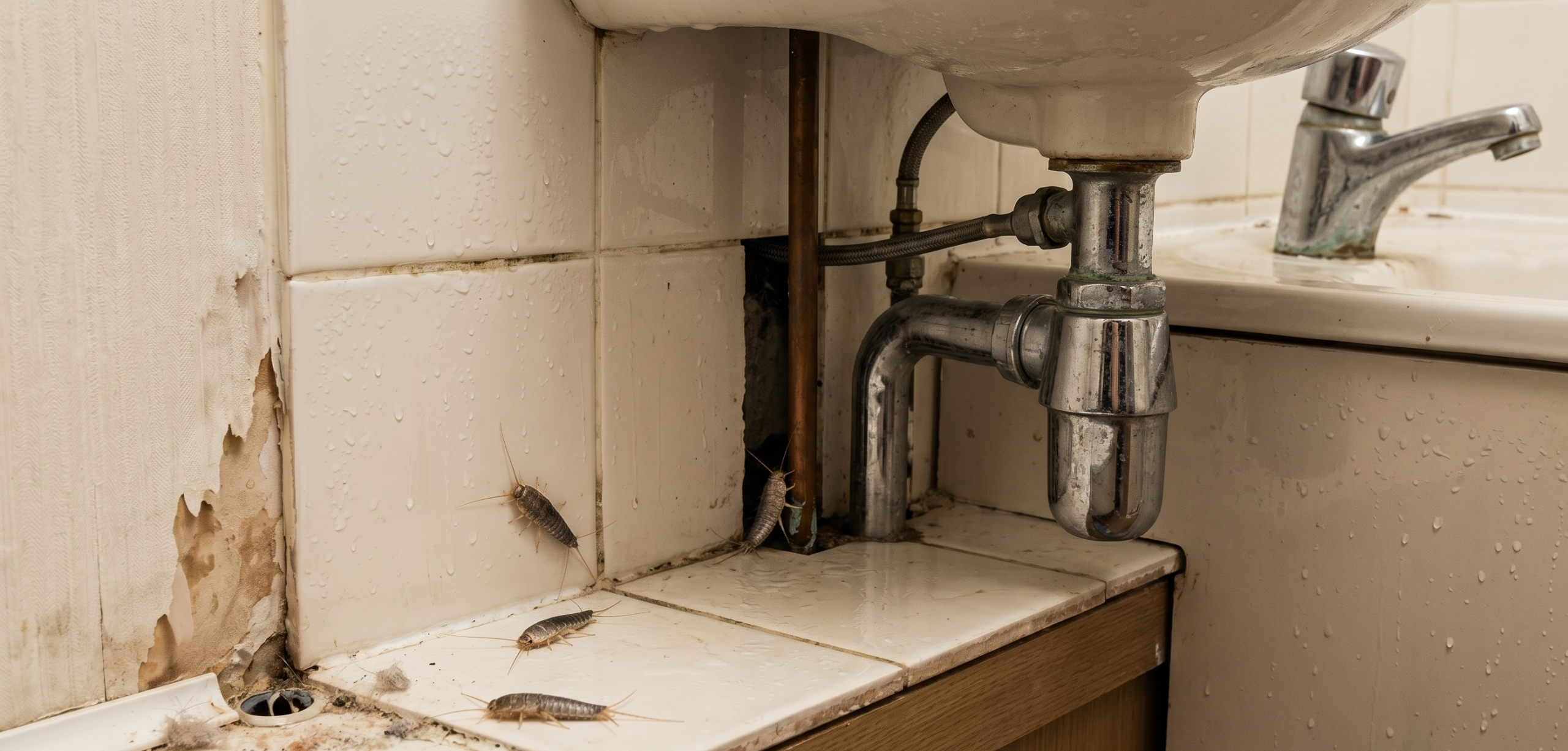
Because silverfish prefer dark humid spaces, infestations commonly remain hidden for long periods before activity becomes noticeable indoors.
Why Damp Environments Attract Silverfish
Silverfish thrive in environments where moisture levels remain consistently high. Bathrooms, kitchens, utility spaces, basements, lofts, and poorly ventilated storage areas are among the most common locations where silverfish activity develops.
In many London flats and older properties, condensation and limited airflow can create ideal indoor conditions for silverfish to survive and spread.
Silverfish are commonly attracted to:
- Condensation around windows and walls
- Leaks and damp structural areas
- Poorly ventilated bathrooms
- Humid kitchens and utility rooms
- Storage cupboards and loft spaces
- Pipework and hidden moisture sources
Silverfish Prefer Hidden Indoor Spaces
Silverfish are mainly nocturnal insects, which means they are most active during the night while remaining hidden during the daytime.
They commonly hide inside:
- Bathrooms and kitchens
- Storage boxes and cupboards
- Wall gaps and flooring edges
- Behind skirting boards
- Loft and utility areas
- Damp paper or cardboard storage
Because silverfish avoid light and open spaces, infestations may continue developing unnoticed for extended periods.
Moisture Problems Often Lead to Recurring Infestations
Even after visible silverfish are removed, infestations may continue returning if the underlying moisture conditions remain unresolved.
Properties affected by condensation, leaks, mould, or poor ventilation often continue attracting silverfish activity over time.
This is why professional silverfish pest control in London usually focuses not only on treatment itself, but also on identifying the environmental conditions supporting the infestation.
What Silverfish Commonly Damage
Silverfish feed on materials containing starches and organic substances. Over time, infestations may contribute to damage around:
- Books and paper materials
- Wallpaper and cardboard
- Stored clothing and fabrics
- Food packaging
- Archived documents and storage boxes
Although silverfish are not considered dangerous to humans, recurring infestations may still create ongoing property and storage problems.
How Professional Silverfish Treatment Works
Professional silverfish treatment depends on the infestation severity, moisture conditions, and the areas affected inside the property.
Treatment commonly focuses on:
- Identifying hidden infestation areas
- Applying targeted insecticide treatment
- Monitoring recurring activity
- Reducing moisture-related infestation risks
- Providing prevention recommendations
In more severe or recurring cases, a professional pest inspection and survey in London may help identify hidden infestation areas and the environmental conditions allowing silverfish activity to continue.
Reducing Silverfish Risks Indoors
Long-term silverfish prevention often involves improving ventilation and reducing excess moisture inside the property.
This may include:
- Reducing indoor humidity
- Improving airflow in bathrooms and kitchens
- Addressing leaks and damp areas
- Keeping storage spaces dry
- Reducing condensation build-up
Professional Silverfish Control Across London
At London Heat Treatment, professional silverfish pest control services are available across London for homes, flats, rental properties, and commercial premises affected by recurring silverfish infestations and moisture-related pest activity.
Professional inspections and targeted treatment plans help identify hidden activity and reduce the risk of recurring infestations returning indoors.