
How to Reduce Fly Infestations in Summer
Fly activity often increases significantly during the warmer summer months as higher temperatures create ideal breeding conditions for house flies, fruit flies, drain flies, and bluebottles.
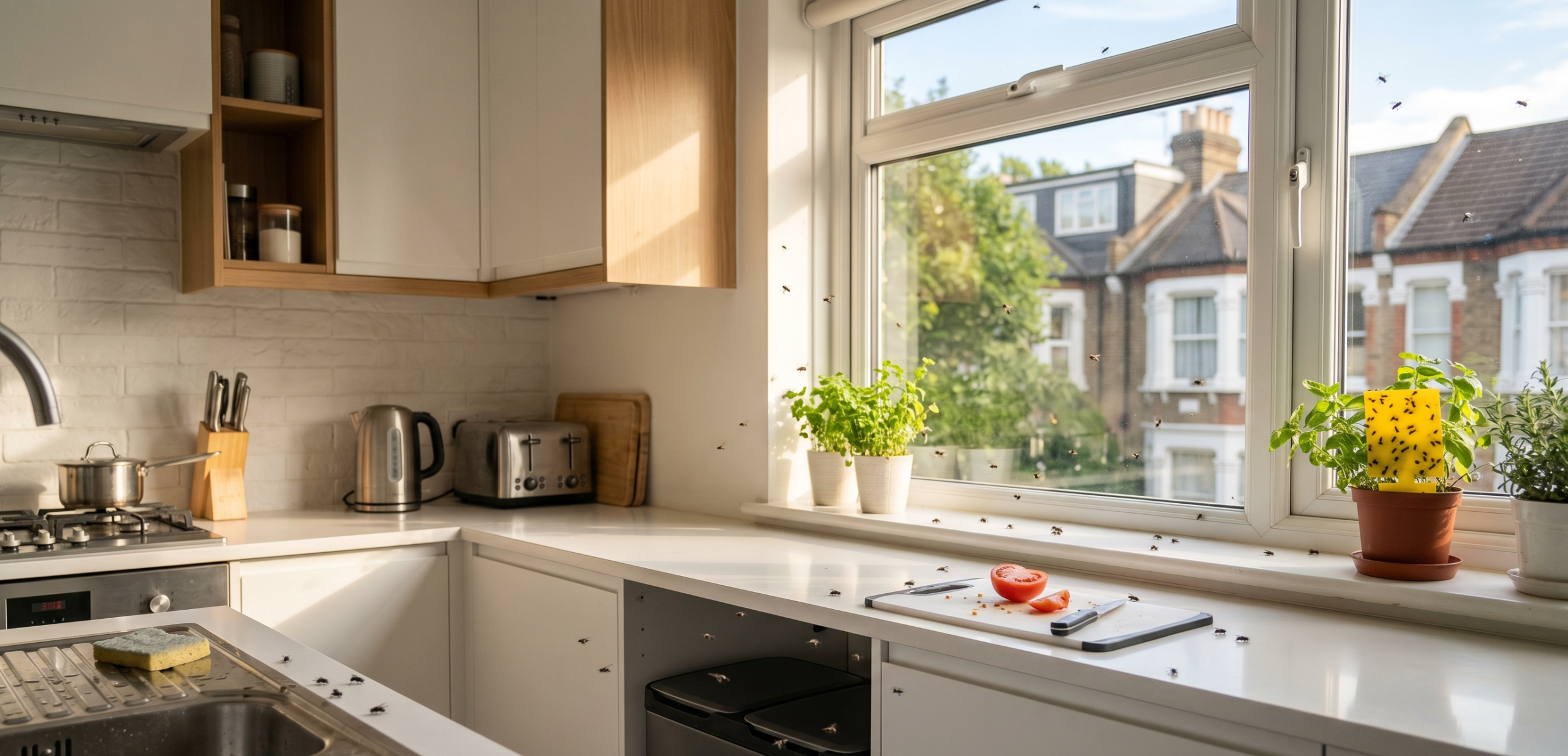
Homes, restaurants, kitchens, bins, food preparation areas, and commercial properties are especially vulnerable during summer when food waste, moisture, and warm indoor conditions attract flying insects indoors.
Although occasional flies are common, recurring indoor fly activity may indicate hidden breeding areas developing somewhere inside or around the property.
Why Fly Activity Increases During Summer
Warm temperatures accelerate the fly breeding cycle, allowing infestations to grow much faster than during colder periods.
Flies are commonly attracted to:
- Food waste and bins
- Drainage systems
- Standing water
- Food preparation areas
- Organic material
- Sugary liquids and residue
- Poorly cleaned kitchen areas
Even small amounts of organic residue may support recurring fly activity indoors during warmer weather.
Keep Food Areas Clean
Reducing accessible food sources is one of the most important ways to help minimise fly activity indoors.
During summer, kitchens and food preparation areas should be cleaned regularly to reduce food residue that may attract flies.
This includes:
- Cleaning kitchen counters and sinks
- Removing food waste quickly
- Keeping bins sealed
- Cleaning sugary spills immediately
- Storing food properly
- Reducing standing water around sinks
Pay Attention to Drains & Pipework
Drain flies and other moisture-related fly infestations often develop inside drains, pipework, and damp organic build-up hidden inside plumbing systems.
Recurring fly activity around sinks, utility rooms, or bathrooms may sometimes indicate hidden breeding conditions inside drainage systems.
Regular drain cleaning and reducing moisture build-up can help lower infestation risks.
Keep Windows & Entry Points Protected
Open windows and doors during warmer weather may allow increased fly activity indoors, particularly near kitchens and waste areas.
Reducing indoor access points may help minimise recurring infestations.
This may include:
- Installing fly screens
- Keeping doors closed where possible
- Reducing gaps around windows
- Managing waste storage areas carefully
Commercial Properties Often Face Higher Risks
Restaurants, cafés, hospitality venues, food preparation areas, and commercial kitchens often experience increased fly activity during summer because food waste and moisture are more difficult to control in busy environments.
Recurring fly infestations inside commercial premises may also create hygiene concerns and reputational risks if left untreated.
Professional fly pest control in London is commonly used for restaurants, commercial kitchens, shared buildings, and hospitality environments affected by ongoing infestations.
When DIY Fly Control Stops Working
Many supermarket fly sprays only reduce visible adult flies temporarily while hidden breeding areas continue producing new activity indoors.
If fly infestations continue returning despite cleaning and DIY treatment, professional pest control may be required to identify hidden breeding areas and the underlying cause of the infestation.
In more severe or recurring situations, a professional pest inspection and survey may help identify:
- Drain-related infestations
- Hidden breeding sources
- Moisture problems
- Waste-related activity
- Structural risk areas
Professional Fly Control Across London
At London Heat Treatment, professional fly pest control services are available across London for homes, restaurants, commercial kitchens, rental properties, hospitality venues, and businesses affected by recurring fly infestations.
Professional inspections and targeted treatment plans help identify breeding sources and reduce long-term fly activity indoors.