
Carpet Moths vs Clothes Moths: What’s the Difference?
Carpet moths and clothes moths are among the most common fabric-related pests found inside London homes and flats. Although both infestations involve moth larvae damaging natural materials, the areas affected and the signs of activity are often slightly different.
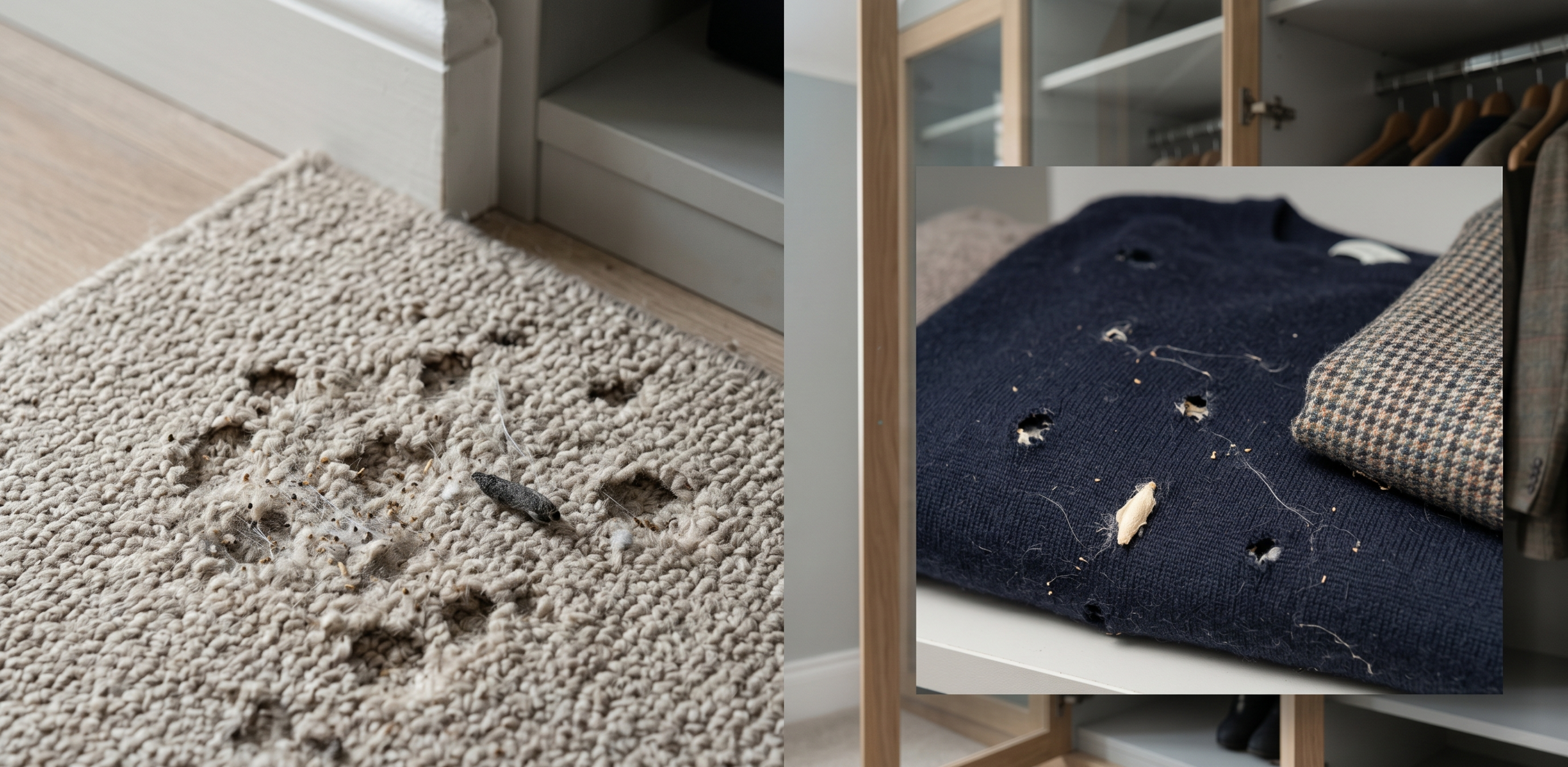
Because moth infestations usually develop slowly inside hidden indoor spaces, many people do not notice the problem until visible fabric or carpet damage has already appeared.
What Are Clothes Moths?
Clothes moths are commonly attracted to natural fibres such as wool, cashmere, silk, fur, and stored fabrics.
Infestations often develop inside:
- Wardrobes and cupboards
- Stored clothing
- Fabric storage boxes
- Blankets and bedding
- Upholstered furniture
- Curtains and soft furnishings
Adult clothes moths themselves are usually harmless. The main damage is caused by moth larvae feeding on natural fibres hidden inside dark undisturbed areas.
What Are Carpet Moths?
Carpet moth infestations commonly affect wool carpets, rugs, carpet edges, and hidden flooring areas where moth larvae can remain undisturbed for long periods.
Carpet moth activity is often discovered:
- Under beds and furniture
- Along carpet edges
- Inside wardrobes or storage rooms
- In low-traffic rooms
- Beneath rugs and soft furnishings
Because carpet moth larvae prefer dark quiet environments, infestations may continue spreading before visible moth activity is noticed.
The Main Damage Comes From Larvae
One of the most common misunderstandings is that flying moths themselves are causing the damage.
In reality, the damage usually comes from larvae feeding on natural fibres after eggs have been laid inside hidden infestation areas.
This is why moth infestations often continue developing even when only a few adult moths are visible indoors.
Signs of Moth Infestations Indoors
Common signs of clothes moth or carpet moth activity include:
- Small holes in clothing or fabrics
- Damage to carpets or rugs
- Adult moths flying indoors
- Larvae or silk webbing in hidden areas
- Damage concentrated around dark undisturbed spaces
- Recurring moth activity inside wardrobes or bedrooms
Moth infestations are commonly discovered only after significant fabric or carpet damage has already occurred.
Why DIY Moth Treatments Often Fail
Many supermarket moth sprays and traps only reduce visible adult moth activity temporarily while hidden larvae and eggs continue developing inside carpets, wardrobes, fabrics, and concealed storage areas.
Without treating hidden infestation zones, moth activity may continue returning after DIY treatment.
Professional moth heat treatment in London helps target hidden moth activity, larvae, and eggs throughout the affected environment rather than only treating visible surfaces.
How Professional Moth Heat Treatment Works
Professional moth heat treatment works by gradually raising temperatures throughout the room to levels moths and larvae cannot survive.
Heat treatment helps reach hidden infestation areas inside:
- Carpets and rugs
- Wardrobes and cupboards
- Stored clothing
- Soft furnishings
- Upholstered furniture
- Storage compartments
Depending on infestation severity, professional inspections may also help determine how far the infestation has spread throughout the property.
In severe or recurring cases, a professional pest inspection and survey in London may help identify hidden infestation areas before treatment begins.
Professional Moth Control Across London
At London Heat Treatment, professional moth heat treatment services are available across London for homes, flats, rental properties, hospitality venues, and commercial properties affected by clothes moth and carpet moth infestations.
Professional inspections and targeted treatment plans help reduce hidden infestation activity and protect carpets, clothing, fabrics, and stored belongings from further damage.